
Baby Sleep in Hot Weather: How to Keep Your Baby Cool
Posted
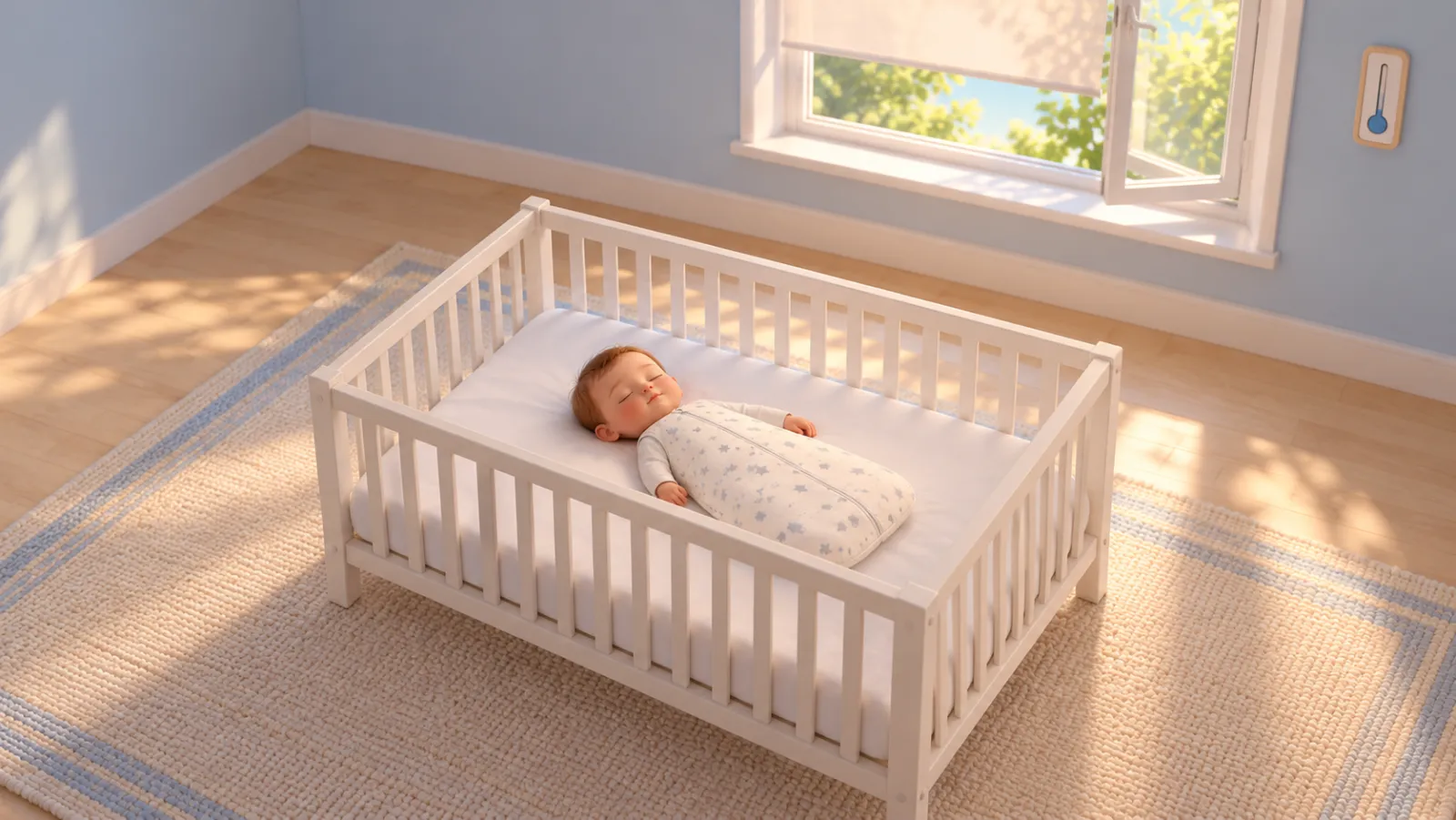
To help a baby sleep in hot weather, cool the room as much as you can, take off clothing and bedding layers, and feel their chest or the back of their neck to check whether they are too hot. Keep the sleep space firm, flat and clear, even when the usual routine slips.
What Room Temperature Is Best for a Baby in Hot Weather?
The Lullaby Trust and the NHS both recommend keeping the room your baby sleeps in at 16–20°C. Overheating can increase the risk of sudden infant death syndrome (SIDS).
Room temperature is hard to judge by touch, so use a room thermometer.
In a heatwave you may not reach 20°C, even after you have done everything you can. Treat the range as something to aim for. If the heat outside makes it impossible, keep to all the other safer-sleep steps and keep checking your baby.
How Can I Keep My Baby Cool at Night?
Cool the room during the day, take off layers as it warms up, and check your baby often.
- Close windows, curtains and blinds during the day, then open them at night once the air outside has cooled. That is the NHS heatwave advice for any room.
- Open the bedroom door as well as a safe window if that helps air move through.
- Use a fan to move air around the room, placed well away from the cot.
- Move the cot out of direct sunlight and away from radiators and blind cords.
- Take a layer off, then feel your baby's chest or the back of their neck to see if it worked.
Do not put ice packs, cold water bottles, wet towels or any other loose items in the cot. Safer sleep advice is to keep the sleep space clear, with no pillows, duvets, cot bumpers, soft toys or bulky bedding. That does not change in a heatwave.
What Should a Baby Wear to Sleep in Hot Weather?
Dress your baby for the room temperature, not for the season. Above 20°C the Lullaby Trust says a short-sleeve vest is suitable, and in particularly hot conditions just a nappy is fine.
If you use a baby sleep bag, follow the manufacturer's tog and temperature guidance. Never add a blanket on top of a sleep bag, and never put one sleep bag inside another, because the trapped air makes it warmer than the tog rating suggests.
Take hats off indoors. The NHS advises removing hats and extra clothing as soon as you come indoors or get into a car, bus or train, even if that means waking your baby. Babies lose heat through their heads, so keep the head uncovered for sleep.
Babies vary, so check yours after you settle them, and again at feeds or normal wakings.
How Do I Know If My Baby Is Overheating?
Feel their chest or the back of their neck. If the skin is hot, sweaty or clammy, your baby is too hot. Take a layer off and cool the room. Hands and feet often feel cool, and the NHS says that is normal, so they will not tell you whether your baby is too warm.
Call 999 or go to A&E if your baby:
- is difficult to wake or more sleepy than usual;
- is not responding as they normally do;
- is not feeding;
- has not had a wet nappy for 12 hours;
- is breathing very fast or with difficulty;
- is floppy;
- has pale, blotchy, grey or blue skin or lips;
- has a very high or very low temperature.
These are NHS warning signs for serious illness in a baby, from its pages on when to get urgent medical help and sepsis. Call 111 at any point you are worried and not sure what to do.
Does My Baby Need Extra Water in Hot Weather?
Fully breastfed babies do not need any water until they start solid food, though the Lullaby Trust says they may want to breastfeed more often in hot weather.
Formula-fed babies under 6 months may need small sips of cooled boiled water in hot weather, as well as their usual milk feeds. Water for a baby under 6 months has to be boiled first and then cooled. From 6 months, drinking water no longer needs boiling.
Do not dilute formula or change the powder-to-water ratio, and do not replace a milk feed with water. Prepare feeds exactly as directed. Ask your health visitor or GP if you are unsure.
Can I Use a Fan While My Baby Sleeps?
Yes. The Lullaby Trust says you can use a fan to cool the room, but do not aim it directly at the baby.
Keep the fan stable, and keep it and its cable out of reach and away from the cot. A fan does not replace checking the room temperature or adjusting clothing and bedding.
Fans also make background noise, which some babies settle to and others do not. Keep the sound low. You do not need full speed just to mask other noise, and there is more on white noise and sleep if you are weighing it up.
How Should My Baby Nap in a Pram or Car Seat in Hot Weather?
Never cover a pram, buggy or travel system with a blanket, muslin or any other cover that stops air flowing. Both the Lullaby Trust and the NHS warn that this can lead to overheating.
Use a clip-on sunshade or parasol instead. It shades your baby, lets air circulate, and leaves you a clear view of them. Keep babies under 6 months out of direct sunlight altogether, and check the chest or neck regularly.
Car seats are for travel, not for main sleep. The NHS advises taking your baby out of the car seat as soon as you arrive, so move them to a firm, flat surface for the rest of the nap. There is more on out-and-about sleep in our guide to travelling with a baby.
Should I Change My Baby's Sleep Schedule in Hot Weather?
Follow your baby's cues and accept a messier day than usual. Heat affects appetite, comfort and settling, so naps may be shorter and bedtime may drift. A cooler part of the day may be easier for a nap, but safer sleep and feeding come first. Do not keep a hot, distressed baby awake to protect a schedule.
Wake Wise records sleep times. It does not measure room temperature and it cannot tell you whether your baby is safe in the heat, so use a thermometer and your own checks for that.
Sources and Related Reading
- The Lullaby Trust: Hot weather
- The Lullaby Trust: How to dress a baby for sleep
- The Lullaby Trust: Safer sleep advice
- NHS: Sudden infant death syndrome (SIDS)
- NHS: Keeping your baby safe in the sun
- NHS: Drinks and cups for babies and young children
- NHS: Heatwave, how to cope in hot weather
- NHS: When to get urgent medical help for babies and children under 5
- NHS: Sepsis
- NHS: Helping your baby to sleep
This article is general information, not medical advice. Use current NHS and Lullaby Trust advice and seek help promptly if a baby seems unwell, overheated, dehydrated, difficult to wake, or has breathing or feeding problems.